Researchers
Home | Researchers
Welcome to our researchers’ page.
Here you will find specialised content for researchers and academics, from events, to training resources, to funding opportunities.
LifeWatch ERIC Community
Resources & Services


Training Resources
Welcome to the LifeWatch ERIC consultation
Welcome to the LifeWatch ERIC consultation
FAQs
Do you have questions regarding the organisation and functioning of LifeWatch ERIC?
Consult our FAQ.
Research Infrastructures are facilities, resources and services that are used by research communities to conduct research and foster innovation in their fields.
They include: major scientific equipment (or sets of instruments), knowledge-based resources such as collections, archives and scientific data, e-Infrastructures, such as data and computing systems and communication networks, and any other tools that are essential to achieve excellence in research and innovation.The European Research Infrastructure Consortium (ERIC) is a specific legal form that facilitates the establishment and operation of Research Infrastructures with European interest. Advantages:
- A legal capacity recognised in all EU countries;
- Flexibility to adapt to specific requirements of each infrastructure;
- A faster process than creating an international organisation;
- Exemptions from VAT and excise duty.
- Establishes and operates the infrastructure and information systems necessary to mobilise and integrate data and algorithms for biodiversity and ecosystem research, including enhancing understanding, linkages and synergies with other societal challenges such as climate change adaptation and mitigation, and to provide analytical capabilities;
- Provides access to data collected by science at a global level and offers ICT services, tools, storage capacity and computational power, to transform information into new knowledge;
- Connects and brings together physical observatories, research centres and scientific communities into a single web space accessible to all; in doing so
- Offers researchers and stakeholders wherever they are, regardless of their access to funding and facilities, the resources to enact their own innovative scientific approach; and
- Empowers citizens to engage with science and contribute to their own well-being and survival.
The core structural components are the three Common Facilities, serving the entire ERIC and responsible for the implementation, coordination and management of all activities:
- Statutory Seat and ICT e-Infrastructure Technical Office (SSO, ICT-Core), Seville, Spain;
- Service Centre (SC), Lecce, Italy;
- Virtual Lab and Innovation Centre (VLIC), Amsterdam, The Netherlands.
- Member States of the European Union;
- Associated Countries;
- Other Third Countries;
- Intergovernmental Organisations.
- Participate and vote in the General Assembly (contributing to the definition of strategic objectives and implementation plans);
- Access information and services provided by LifeWatch ERIC;
- Benefit from any other rights mentioned in the Statutes or included in the Implementing Rules.
- Attend the General Assembly without any voting
- Let their research communities participate in LifeWatch ERIC events, such as workshops, conferences, training courses at preferential rates, space permitting;
- Let their research communities have access to support from LifeWatch ERIC in developing relevant systems, processes and services.
- Be part of a highly specialised European Research Infrastructure Consortium;
- Aggregate and organise national scientific communities working on biodiversity and ecosystems, maximising their visibility and impact;
- Use the LifeWatch ERIC brand to promote national outcomes and initiatives;
- Be included in European and national roadmaps and Smart Specialisation Strategies;
- Have access to dedicated European, national and regional programmes and funding schemes;
- Have access to technology, innovation and knowledge through collaboration on the development and operation of the e-Infrastructure.
- Support and facilitate the objectives, tasks and governance of LifeWatch ERIC;
- Identify a representing entity and maintain a National LifeWatch Support Committee to promote adoption of relevant standards in national resources and tools creation projects;
- Promote the uptake of services among scientific communities and researchers of different biodiversity-related areas of knowledge, including ecosystem science and bioinformatics, and gather providers’ and users’ input and feedback;
- Commit financially towards a common budget: In Cash Contribution (15%) and In Kind Contribution (85%) (see Annex 2);
- Support any other activity agreed within the framework of LifeWatch ERIC resulting from the Statutes or Implementing Rules;
- Maintain their membership until the end of the five-year period in force at the moment of their accession.
LifeWatch ERIC is the e-Science European infrastructure for biodiversity & ecosystem research, investing in three essential components: open access resources, reproducible analytics and mobilised communities. It tackles the constraints affecting biodiversity and ecosystem research, enabling the exploration of new frontiers in ecological science and supporting society in addressing planetary challenges.
LifeWatch ERIC offers scientists access to data, web-services, VREs, workflows and training opportunities to support biodiversity and ecosystem research.
You can access all LifeWatch ERIC Resources through its MetaData Catalogue. Please send an email to our Web Portal Officer to receive access: lucia.vaira[at]lifewatch.eu.
You can share your research outputs by publishing metadata of datasets, services, VREs and workflows on the LifeWatch ERIC MetaData Catalogue. Get in touch with our Web Portal Officer to request access: lucia.vaira[at]lifewatch.eu.
No, all LifeWatch ERIC resources are free of charge.
EcoPortal is one of our intiatives. In the last decade, ecological research groups and infrastructures have contributed to the definition and the production of core and domain ontologies as well as of vocabularies and domain-relevant reference lists.
In order to support the scientific community in the management and integration of these different approaches, LifeWatch ERIC has created EcoPortal, an online space designed to collect semantic resources and provide the necessary services for enabling discovery and interoperability.
LifeWatch ERIC envisages the creation of a repository for semantic resources with associated essential curation services.
LifeBlock is a Blockchain-based platform for engaging, tracking and securing biodiversity and ecosystem research resources worldwide, making use of anti-tampering, provenance and traceability e-Services to guarantee the availability of FAIR-compliant data. It allows for the analysis of multiple unstructured inputs from remote and in-field sensing, Remote Sensing-GIS datasets and original studies in order to produce value estimates.
Click here for a comprehensive presentation on LifeBlock.
The Internal Joint and Collaborative Initiative (IJI) has been created in order to:
- Boost the integration of tools and services into the LifeWatch ERIC web portal;
- Focus on a major scientific issue in biodiversity and ecosystem research with relevant socio-economic implications in different fields;
- Produce the new and synthetic knowledge that is needed by institutions, administrations and managers to find solutions for major environmental problems on various scales;
- Involve the LifeWatch ERIC national scientific communities, key international research groups and other European research Infrastructures with related interests and running activities; and,
- Make this effort an example of the functioning of the LifeWatch ERIC e-Infrastructure through its dissemination and outreach activities.
The topic of non-indigenous and invasive species (NIS) has been chosen as the first demonstration case of the functioning of the LifeWatch ERIC e-Infrastructure. The development of virtual research environments within the e-Infrastructure will help address some of the main issues on NIS in the field of ecosystem and habitat type vulnerability and in the context of climate change, as well as help highlight societal needs and potential solutions to be tested.
Training and support materials are available on our Training Platform. Please click and register to enrol in courses and browse our resources.
LifeWatch ERIC is currently working on its Community Platform, where you will be able to join and create working groups, browse our calls and submit opportunities on our board, as well as access our directory of scientific skills. Stay tuned for its release!
Latest News for Researchers
FAIRness as a research booster
New ESFRI Roadmap Launched
LifeWatch ERIC in round table: "A Preview of the Role of Science at the EU-Africa Summit 2022"
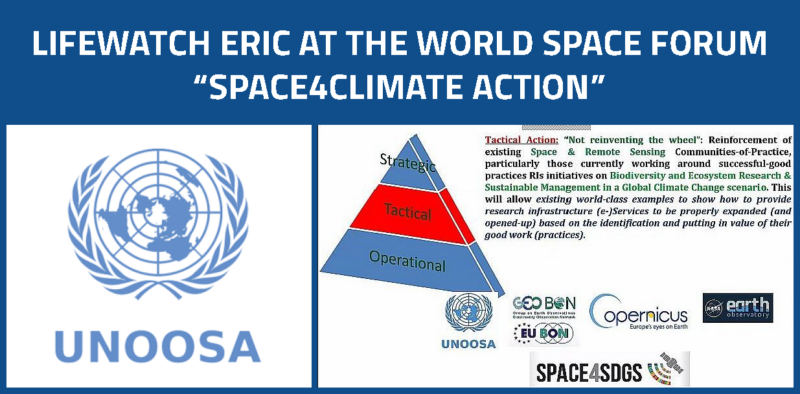
Space4Climate Action: LifeWatch ERIC at the World Space Forum
LWGreece Research Infrastructure Data Services
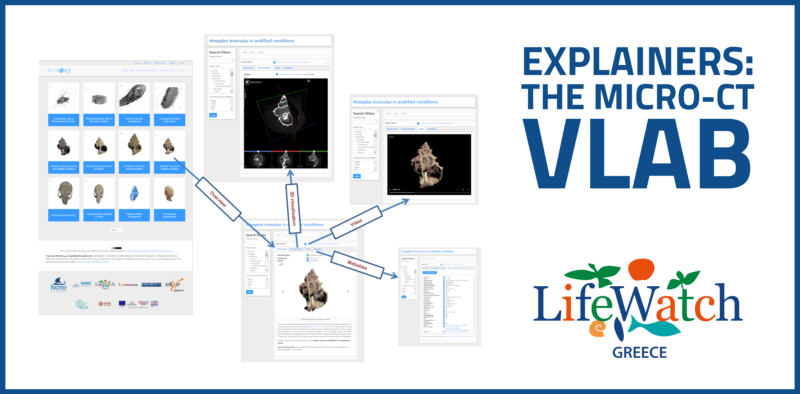
Explainers: the Micro-CT vLab
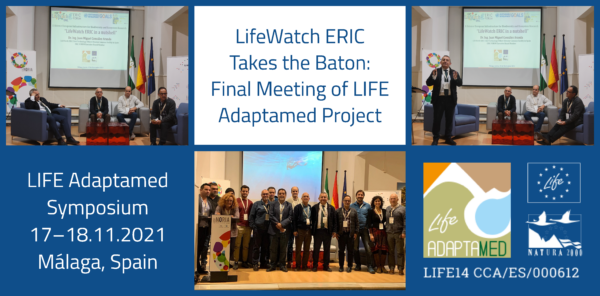
LifeWatch ERIC Takes the Baton: Final Meeting of LIFE AdaptaMED Project
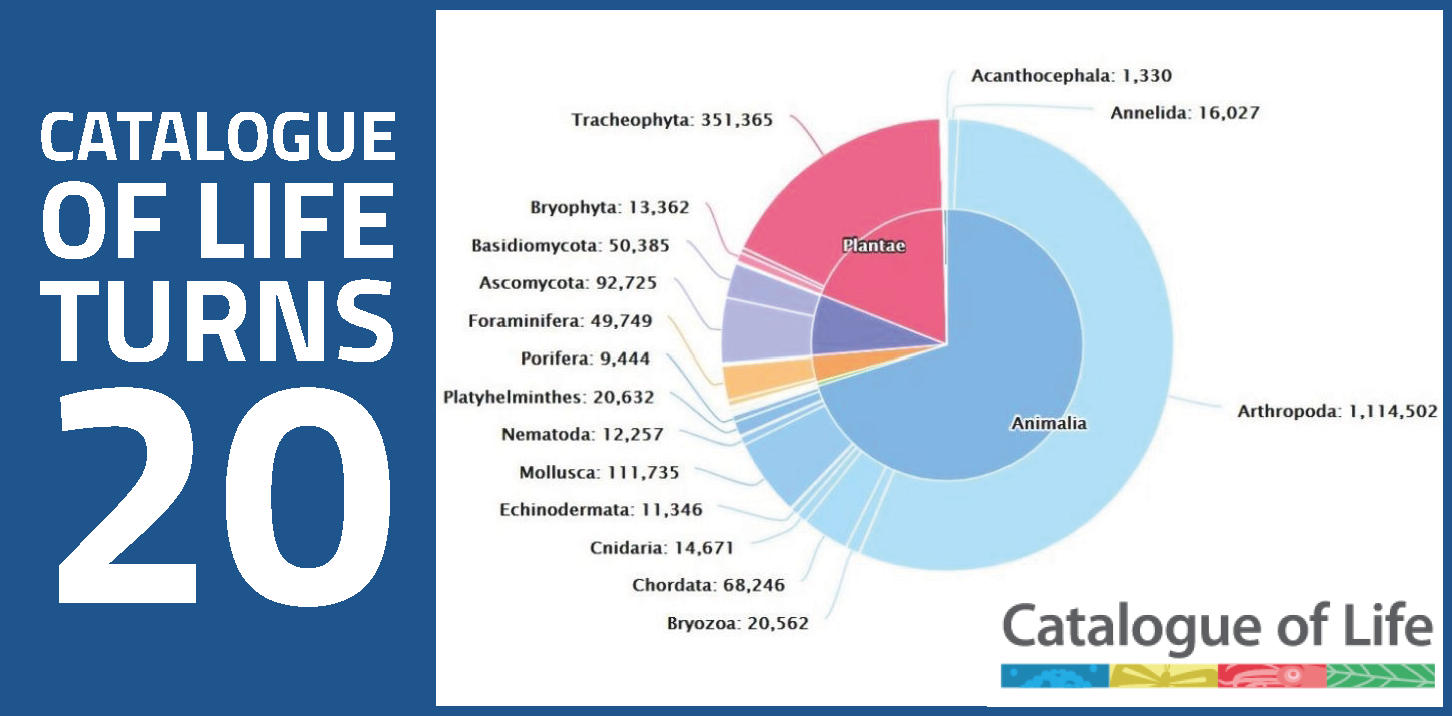
Catalogue of Life turns 20
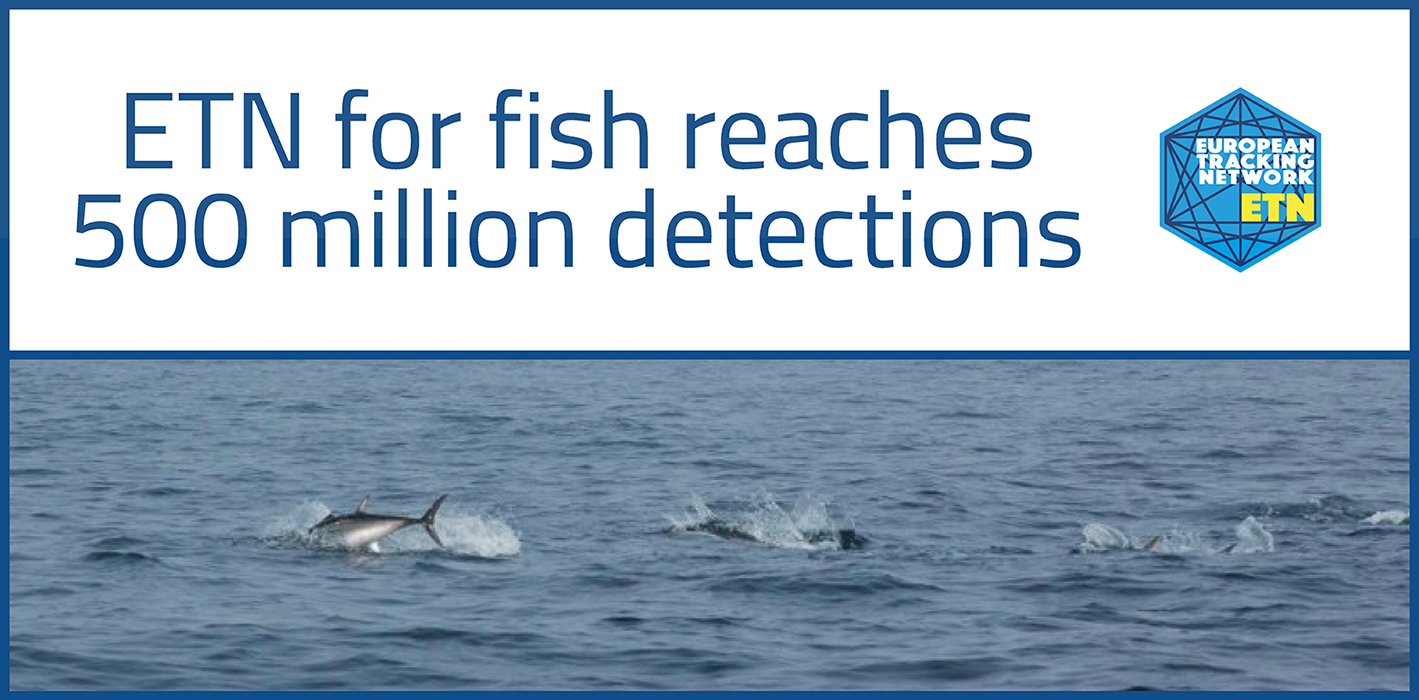
European Tracking Network for fish reaches 500 million detections
WoRMS endorsed as 'Project Action' for the Ocean Decade
Events for Researchers
Impact and Action: A Virtual Science-Policy Symposium

Ecology Across Borders 2021
AGU Fall Meeting
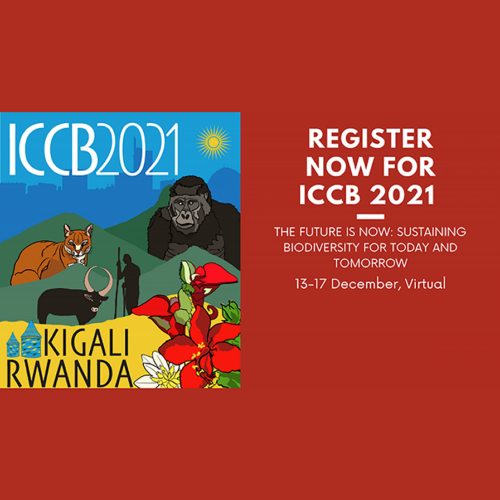
International Congress for Conservation Biology
EGERIC Report and Recommendations
Stakeholder meeting of AFRIMED EU project – Restoring macroalgal forests in the Mediterranean Sea: are we ready for scaling up?
Training event: I-ADOPT Framework for FAIR variables and metadata description
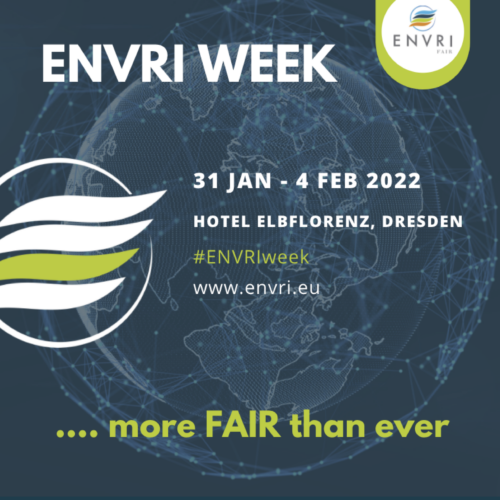
ENVRI Week 2022
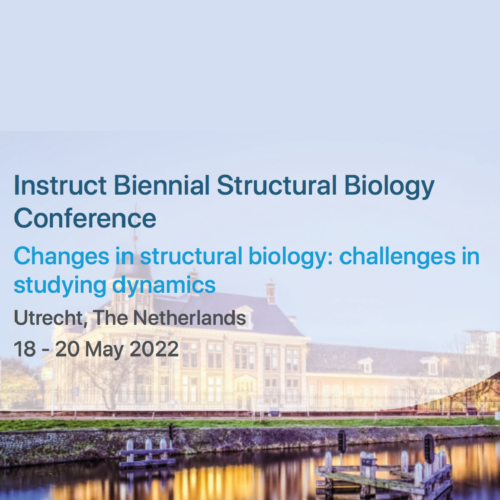
Instruct Biennial Structural Biology Conference

International Data Week 2022
| Name | Surname | Organisation |
|---|---|---|
| Michael | Mirtl | UFZ, eLTER RI |
| Jonathan | Ewbank | ERINHA-AISBL |
| Laurent | Delauney | IFREMER, JERICO RI |
| Ana | Casino | CETAF |
| Michel | Boër | AnaEE-ERIC |
| Giuseppe | Aprea | ENEA, PRO-GRACE Project |
| Robert M | Waterhouse | SIB Swiss Institute of Bioinformatics, BGE Project |
| Costas | Tsigenopoulos | IMBBC, HCMR |
| Peter | van Tienderen | University of Amsterdam, LifeWatch ERIC |
| Heliana | Teixeira | CESAM & University of Aveiro, GES4SEAS Project |
| Tassos | Stavropoulos | OpenAIRE, OSTrails Project |
| Adrian | Stanica | GeoEcoMar, DANUBIUS RI |
| Dick | Schaap | MARIS B.V., Blue Cloud Project |
| Patrick | Ruch | HES-SO - HEG Geneva |
| Susie | Robinson | EMPHASIS RI |
| Niels | Raes | Naturalis Biodiversity Center, BMD Project |
| Fotis E | Psomopoulos | CERTH, EVERSE Project |
| Antonello | Provenzale | National Research Council (CNR IGG), ITINERIS Project |
| Ana | Portugal Melo | MIRRI-ERIC |
| Nicolas | Pade | EMBRC-ERIC |
| Vanessa | Marrocco | LifeWatch ERIC |
| Natalia | Manola | OpenAIRE, OSTrails Project |
| Dimitris | Koureas | Naturalis Biodiversity Center, DiSSCo RI, BGE Project |
| Georgios | Kotoulas | IMBBC, HCMR |
| Cristina | Huertas Olivares | LifeWatch ERIC |
| Katharina F | Heil | ELIXIR |
| Jens K | Habermann | BBMRI-ERIC |
| Stefan | Gruber | SHARE-ERIC |
| Giovanni | Giuliano | ENEA, PRO-GRACE Project |
| Teodor | Georgiev | Pensoft Publishers |
| Tiziana | Ferrari | EGI Foundation |
| John | Eriksson | EuroBioImaging ERIC |
| Federico | Drago | EGI Foundation, ENVRI-Hub NEXT |
| Klaas | Deneudt | Flanders Marine Institute (VLIZ), DTO BioFlow Project |
| Francesco | De Leo | National Research Council, CNR-IRET |
| Berta | Companys | ICM, CSIC, ANERIS Project |
| Claudia | Coman | MARIS B.V. |
| Eva | Chatzinikolaou | IMBBC, HCMR, LifeWatch Greece |
| Alberto | Basset | University of Salento, LifeWatch ERIC, National Research Council |
| Olga | Ameixa | University of Aveiro, RESTORE4Cs |
| Christos | Arvanitidis | LifeWatch ERIC |
| Jana | Pavlic-Zupanc | BBMRI-ERIC |
| Lyubomir | Penev | Pensoft Publishers & Bulgarian Academy of Sciences |
| Jaume | Piera | ICM, CSIC, ANERIS Project |
| Paraskevi | Pitta | IO, HCMR, AQUACOSM-plus, MESOAQUA |
| Ingrid | Puillat | EMSO ERIC |
| David | Richter | SHARE-ERIC |
| Diana | Stepanyan | ERINHA-AISBL |
| Anton | Ussi | EATRIS-ERIC |
| Jan Marcin | Węsławski | IOPAN, MARBEFES Project |
| Gabriela | Zuquim | CSC - IT Center for Science, BioDT Project |
| Salvador Jesús | Fernández Bejarano | LifeWatch ERIC |
| Hisham M | Shaikh | Flanders Marine Institute |
| fooks | samuel | Flanders Marine Institute |
| Sara | Montinaro | LifeWatch ERIC |
| Michiel | Perneel | Flanders Marine Institute |
| Magdalena | Aljancic | ZRC SAZU |
| Amadeu | Soares | CESAM-Centro de Estudos do Ambiente e do Mar, Universidade de Aveiro |
| Peter | Jetter | co-evolve |